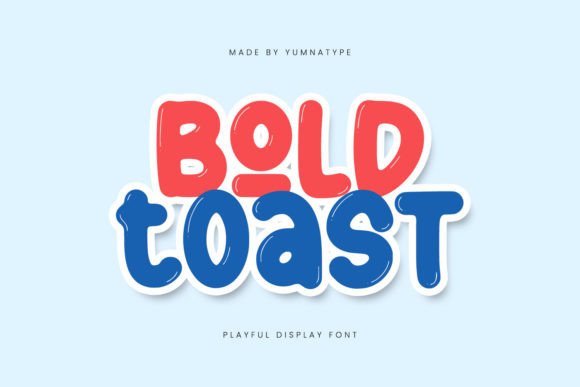
Bold Toast Font: Playful Bubble Display for Small Business Branding
As a small business owner, every piece of visual communication you put out shapes how customers see your brand. Bold Toast is a lively display font that brings a playful and eye-catching bubble style to your designs, making it easier for your business to stand out while still looking professional. Whether you’re launching a boutique, opening a café, or selling handmade products online, choosing the right typeface is a practical decision that affects your brand’s consistency and trustworthiness. Let’s explore how Bold Toast can help you build a cohesive visual identity across real business materials.
How Bold Toast Display Font Adds Personality to Small Business Logos
Bold Toast works beautifully as a logo typeface because its thick, rounded contours immediately convey a friendly and approachable mood. When a customer first sees your logo, you have only a few seconds to communicate what your brand stands for. Bold Toast is a display font that breaks away from corporate stiffness, making it ideal for bakeries, toy shops, children’s clothing brands, or any business that wants to feel warm and inviting. Each letter resembles a bubble, which gives your logo a memorable, almost three-dimensional effect. For example, a soap maker could use Bold Toast for their brand name on a label, instantly signaling that the product is gentle and fun. Just remember to pair it with a simpler secondary typeface for supporting text to keep the logo readable at small sizes.
Using Bold Toast Bubble Font for Product Labels and Packaging Design
Bold Toast is a natural fit for product labels and packaging because its bold, rounded shapes hold up well on small surfaces like jars, boxes, or tubes. When you’re designing for a product that sits on a shelf next to competitors, the display font you choose can make the difference between a glance and a sale. Bold Toast brings a handmade, artisan feel to product packaging, which is especially valuable for small-batch food items, skincare lines, or gift sets. The bubble letters create a sense of lightness and playfulness without sacrificing readability. For a candle business, using Bold Toast on the front label for the product name, then a clean sans serif on the back for ingredients, gives the packaging a polished, balanced look. Always test the font at your actual print size to ensure the contours remain clear.
Bold Toast for Social Media Graphics and Instagram Posts
Social media is where most small businesses connect with their audience daily, and Bold Toast is a font that performs exceptionally well on mobile screens. Its thick lines and open counters mean it stays visible even when viewed on a small smartphone display. Whether you’re creating Instagram Stories, highlight covers, or promotional graphics, Bold Toast adds a burst of energy that aligns with playful, lifestyle-oriented content. For example, a coffee shop could use Bold Toast for a “New Drink Alert” post, placing the text on a simple background to let the bubble shapes pop. The font’s rounded nature also pairs well with illustrations or icons, making your feed feel cohesive and custom. Just keep body text short—headlines and calls to action work best.
Why Bold Toast Works for Café Menus and Boutique Signage
In-store signage and menus need to be read quickly, and Bold Toast offers the clarity that a display font with thick contours can provide. For a café menu, using Bold Toast for category headings (like “Coffee,” “Pastries,” “Specials”) helps customers navigate the board at a glance. The bubble style softens the overall look, making the space feel less clinical and more welcoming. A boutique clothing store might use Bold Toast on a hanging sign or window decal to reinforce a youthful, trendy brand personality. Since the font is inherently decorative, it’s best to use it sparingly—reserve it for key information that needs to grab attention, and use a clean sans serif for descriptive text. This approach keeps your signage professional without overwhelming the viewer.
Pairing Bold Toast with a Clean Sans Serif Font for Brand Consistency
No single font should do all the work in a brand system, and Bold Toast is best used as an accent or headline typeface paired with a neutral partner. A clean sans serif like Open Sans, Lato, or Montserrat offers the readability you need for paragraphs, contact details, and longer product descriptions. This pairing creates a contrast that makes the bubble lettering feel intentional rather than loud. For instance, a children’s party planner could use Bold Toast for the business name on their website banner, then a sans serif for navigation and body text. The same pairing can be carried across business cards, brochures, and digital ads, giving your brand a consistent, recognizable look. Before committing to a font combination, test it on a few mockups—flyer, Instagram post, label—to see how the pairing works in different contexts.
Testing Bold Toast Readability on Labels, Screens, and Print
Bold Toast is a display font designed for impact, so it’s important to test its readability in the exact formats you plan to use. Because the letters are thick and rounded, they can sometimes lose distinction when scaled down too small. On a product label that is only two inches wide, keep the word count short—three to four characters work especially well. For digital use, check how the font renders on both iOS and Android devices, as different browsers may handle the contours slightly differently. Print tests are equally valuable: run a sample sheet with your label design, then view it under store lighting conditions. If the letters start to blur or feel crowded, increase spacing (tracking) slightly. These practical checks ensure that Bold Toast enhances your brand rather than causing legibility issues.
Commercial Licensing for Bold Toast When Selling Products
Before using Bold Toast in any customer-facing materials, understand the commercial fonts licensing that applies. If you plan to use the display font on products you sell—such as candles, T-shirts, or digital templates—you typically need a commercial license that covers merchandise and packaging. Free or personal-use licenses do not allow selling items that feature the font. As a small business owner, it’s worth investing in a proper license to avoid legal issues and to support the type designer. Many font marketplaces offer tiered licenses that scale with your revenue, so you pay a fair price for your usage level. Keep a copy of your license file for each project, especially if you hire a designer to work with Bold Toast on your behalf. This step is a simple way to build trust with your customers and protect your business.
Bold Toast is more than just a playful typeface—it’s a practical tool that can help your small business look consistent, professional, and memorable. By using it thoughtfully across logos, packaging, social media, and signage, you create a brand identity that feels both creative and trustworthy. Start with one application, test the results, and then expand. Your customers will notice the difference a well-chosen display font makes.